About Chitwan Jungle Safari

Pathfinder

Tours & Packages by Chitwan Jungle Safari (27)

Client & Service Reviews

Used Chitwan Jungle Safari's travel services? Rate their guides, communication, reliability, and customer care

–out of 5

No verified reviews yet

  • 5 ★
    0
  • 4 ★
    0
  • 3 ★
    0
  • 2 ★
    0
  • 1 ★
    0
Service & Operator Feedback

Review Chitwan Jungle Safari's Services

Traveled with Chitwan Jungle Safari? Rate their service quality, local guides, communication, and trip organization. If you're not signed in yet, we'll save your draft locally and publish it right after you sign in.

View Tours ↑

Frequently Asked Questions — Chitwan Jungle Safari

Answers provided directly by Chitwan Jungle Safari

What if we are more than 4 people?
Just let us know if you have more than 4 people in your group.
When is best season to travel to Chitwan?
Chitwan National Park – October to May, Bird Watching – December to March. Maximum temperature can reach up to 95 Fahrenheit (35 C) in April through September. November through February is cooler months with an average temperature around 67 Fahrenheit.
testing
testing answer
this is new faq
demo
Morning or afternoon drive?
Morning drives leave at 06:30 and are cooler, often with mist over the grass. Afternoon drives leave at 13:30 and catch animals coming down to water as the light softens. Both cover the same area, so pick the one that fits the rest of your day.
Can I book a private jeep?
Yes, just ask. This tour is priced per seat in a shared jeep with up to seven guests. A private jeep costs more, but you set the pace and the stops, which helps with young children or a lot of camera gear.
Can children come?
Yes, children are welcome from 4 years old. Bring water, a snack and a warm layer for the morning drive, as it's colder than you'd expect once the jeep gets moving.
What animals might we see?
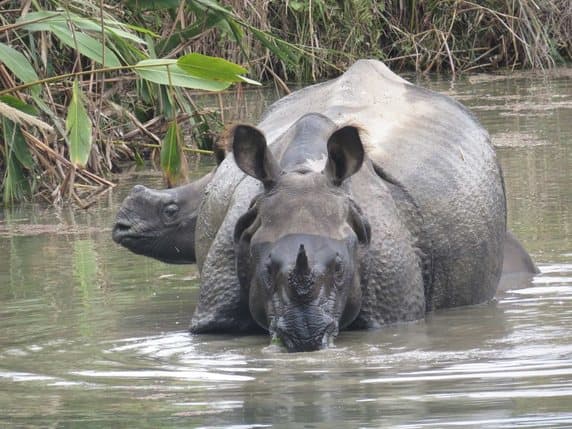
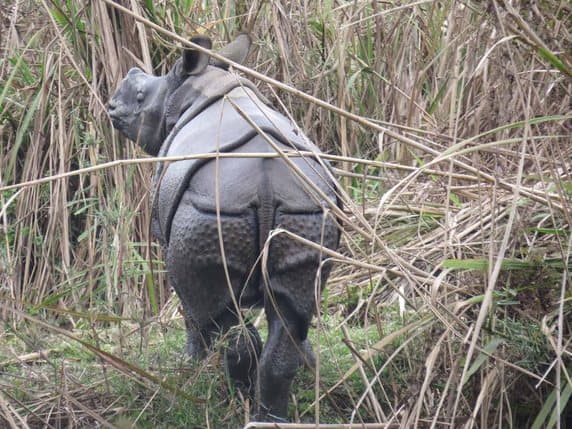
One-horned rhinos are the main hope, along with deer, wild boar, langur monkeys and birds of prey. Tigers and sloth bears are rare on a short drive. Your guide stops wherever there's movement.
Do we cross the river?
Yes. You meet your guide in Sauraha, cross the Rapti by boat and pick up the jeep on the park side, then cross back at the end. The crossing is short and included in the price.
How is this different from the half-day jeep safari?
Distance. The [half-day drive](/tours/chitwan-jeep-safari-half-day) covers the grasslands near Sauraha in three to four hours. The full day heads west to Kasara and the gharial breeding center and comes back by a different route, so you reach quieter parts of the park and have better odds of the shier animals.
Is lunch included?
Yes, a packed lunch and water are included, and you usually eat around Kasara. Bring some snacks and extra water of your own, especially from April onwards, as there are few places to buy anything along the way.
When is the best time to go?
February to May, once the grass has been cut and it's easier to see across the grassland. April and May are very hot by the afternoon, though. It's a long, bumpy day of about eight hours, so it suits people who are happy in a jeep all day.
What is there at Kasara?
Kasara is the park headquarters, and its gharial breeding center lets you see the long-snouted river crocodile up close. It's a good place to stretch your legs and have lunch before the drive back by a different route.
Is it a shared jeep?
Yes, you have a seat in a shared jeep with up to seven guests and a licensed nature guide, and park entry is included. If you'd rather have a jeep to yourselves, ask us before you book.
Do I need to be an experienced birder?
Not at all. Your guide is a birding specialist who knows the calls, so beginners pick things up quickly and keen listers still get plenty of early starts. You'll also get a bird checklist for the area to tick off as you go.
When is the best time for this tour?
November to April. From November to March you'll find the winter migrants, and February to April is good for breeding plumage. Late winter is also when you have a chance of the Bengal florican on the grassland edges.
Should I bring binoculars?
Yes, if you have them. Sharing one pair is frustrating when a bird won't sit still, and a pair of 8x or 10x each is ideal. A camera with a long zoom is a bonus but not essential. Leave bright clothes at home and stick to khaki, olive or brown.
Which birds might I see?
On the river, kingfishers, storks and other waterbirds. Along the grassland edges, raptors and, in late winter, the Bengal florican. Then the buffer-zone wetland on the last morning shows whatever the season has brought in. With more than 540 recorded species, no two trips are the same.
What are the afternoons like?
Quiet, on purpose. Birds are busiest early, so we keep the afternoons for rest and photos. On the evening of day 2 you go through the checklist with your guide and see what you've ticked off.
Is there a toilet, shower or electricity?
There's no electricity or shower, and toilet facilities are basic at best. You get a mattress, bedding and a mosquito net, and that's about it. Most people leave their main bag at their lodge and come back to a hot shower and breakfast in the morning.
Can children come?
Only from 12 years old. It's a long night with very simple facilities and a firm rule about staying inside the tower after dark, so it suits older children who are happy to sit quietly for hours.
What should I bring?
A headlamp (one with a red light is best), a warm layer, insect repellent, long sleeves and trousers, and any medicine you need. Dinner, drinking water and breakfast are included. Binoculars and a power bank are useful too, as there's nowhere to charge anything.
Will I see animals at night?
Mostly you'll hear them: deer alarm calls, owls and things moving in the grass below. Darkness limits what you can see, and spotlighting animals isn't appropriate, so dusk and dawn are your best chances of a sighting.
Does it run all year?
Tower nights depend on community forest permissions and the season, and they may not run at all in the June to September monsoon. October to March is the most comfortable time, though December and January nights are cold and damp.
Will I see a tiger?
Possibly, but probably not, we're afraid. Chitwan has around 128 tigers, and they avoid people. You'll very likely find fresh signs, though, and you may see rhinos, deer, sloth bears or wild boar along the way.
How fit do I need to be?
Fairly fit. You'll walk 12 to 15 km on flat trails over eight or nine hours, often slowly and quietly, with a packed lunch at a watchtower. There are no hills, but it's a long day in the heat, so you need to be 16 or over and comfortable on your feet all day.
When is the best time for tiger tracking?
February to May, when the grass has been cut back and it's easier to see into the grassland and along the trails. April and May are very hot, so bring more water than you think you'll need, and a hat.
What do the guides look for?
Signs. They read fresh pugmarks, scratch marks on trees, scrapes and the alarm calls of deer and langurs, and follow whichever are freshest. You'll pause at waterholes and machans where tigers are known to pass.
Why only six people?
Because a quiet group sees more. Tigers avoid people, and six walkers moving softly behind two guides make far less noise than a crowd. It also makes it easier for the guides to keep everyone together.
Is it safe to walk near rhinos?
It's safe when you follow the rules, which is why two licensed guides come with you. They keep the group at a distance, choose where you stand and tell you what to do if a rhino moves your way. You get a proper briefing before you set off, and it's worth listening closely.
How far will we walk?
About 6 to 8 km on mostly flat ground, through grassland edges and riverine forest, over three to four hours. The canoe ride back rests your legs at the end. You need to be 12 or over, with closed shoes that grip.
Will we definitely see a rhino?
Nobody can promise that, but your guides head for the wallows and feeding areas the rhinos use, so your chances are good. Even on a quiet day you'll see tracks and plenty of birds, and the canoe often passes basking crocodiles.
Morning or afternoon?
Both run, at 06:30 or 14:00. Mornings are cooler for walking, while the afternoon start ends with the canoe ride as the light softens. Bring water either way.
What should I wear?
Neutral clothes, long light trousers and closed shoes with good grip, as you'll walk through grass and along muddy riverbanks. Leave white or bright clothes at the lodge, along with any strong perfume.
Is the canoe ride safe?
Yes. Everyone wears a life jacket, and the dugout simply drifts with the current, so it's calm. You do sit low and close to the water, and mugger crocodiles bask on the banks, so keep your hands inside and do as your guides ask.
Should I go in the morning or the afternoon?
Both run, at 06:30 and 14:30. The morning has mist on the river, cooler air and the busiest birdlife. The afternoon is easier if you've only just arrived. If you can only do it once, we'd pick the morning.
Can children do it?
Yes, from 6 years old, with life jackets. The walk back is easy and mostly flat, but it's on foot in the forest, so children need to be able to walk quietly and stay close to the guides. Closed shoes are a must for everyone.
Will I see crocodiles?
Quite possibly. Mugger crocodiles often bask on the sandbanks, and the silent canoe lets you drift past fairly close. Kingfishers and storks work the same stretch of river. Our [crocodile guide](/wildlife/crocodiles) explains where to look.
How long is each part?
About 45 minutes on the water, then the walk back with your guides, roughly three hours in all. You start and finish at your lodge in Sauraha or the tourist bus park.
Is this an elephant ride?
No, there's no riding. It's a guided visit to the government breeding center at Khorsor, where you see the park's working elephants and, at times, mothers with young calves. Your guide also talks openly about the welfare questions around captive elephants.
How do we get there?
Transport from Sauraha is included. It's a short trip, and depending on the day you might go by jeep, by bicycle or on foot with your guide, through farmland and buffer-zone villages.
Is it suitable for young children?
Yes, all ages are welcome, and it's one of the calmest things to do in Chitwan with little ones. Keep a safe distance from the elephants and follow the handlers' instructions, as they're large animals and can be unpredictable.
How long does the visit take?
About two to three hours from Sauraha and back, starting at 14:00. It fits nicely after a morning canoe ride or jeep drive.
Will we see baby elephants?
Often, but not always, so we can't promise one on your date. You'll see adult elephants either way, and your guide explains how the calves are raised.
Will I ride the elephant?
No. There's no riding at any point. You walk beside the elephant, help prepare its food and watch it at the river, and the mahout decides how close you get and when. If a ride is what you're after, this isn't the tour for you, and we'd rather say so now.
Can children come along?
Yes, from 8 years old, as long as an adult stays with them the whole time. Elephants are big and can be unpredictable, so children need to be happy to listen to the mahout and keep calm. Tell us their ages when you book.
What time does it start, and what should I wear?
We collect you from your lodge in Sauraha at 08:00, and the experience lasts about five hours. Wear neutral clothes you don't mind getting dusty or a bit wet, and closed shoes for the forest path. Leave strong perfume at the lodge, as animals notice it. The [packing list](/travel-guide/what-to-pack) has the rest.
Does it run every day of the year?
We list it all year, but elephant activities depend on the park's current welfare rules, so we confirm it's running for your date before you pay. If it isn't, we'll tell you straight away, and the [breeding center visit](/tours/elephant-breeding-center-visit) is a good alternative.
How many people share the elephant?
Six at most, so everyone gets time with the elephant and the chance to ask the mahout questions. Making the rice-and-grass food parcels is hands-on, so expect messy fingers.
Will I definitely get into the water?
Not necessarily. Helping to scrub from the shallows only happens where current rules allow it, and always under the mahout's direction. If it isn't running on your date, you'll watch bath time from the bank instead, and the price stays the same. We'll tell you which it is before you pay.
What should I bring?
Clothes that can get wet and muddy, sandals or old shoes for the riverbank, and a zip bag for your phone. It's late morning, so a hat and sunscreen are worth having too. There's no riding on this outing.
How long does it take?
About an hour and a half. We meet at 11:00 at your lodge in Sauraha or the tourist bus park, walk down to the riverbank together, and you're back at your lodge in time for lunch.
Can I fit it around other activities?
Easily. It starts at 11:00 and takes about an hour and a half, so it sits neatly between a morning canoe ride or jeep drive and something in the afternoon. It pairs well with the [elephant breeding center visit](/tours/elephant-breeding-center-visit), which starts at 14:00.
Can children join in?
Yes, with an adult. Whether anyone steps into the water is the mahout's call on the day, and the riverbank can be muddy and slippery, so keep little ones close.
Is the whole trip private?
Your guide, your jeep, the canoe ride and the walk are just for the two of you, so outings start and stop when you want. The lodge has other guests, of course, but we choose one on the quieter side of Sauraha and give you a better room.
Is the price for one person or for the couple?
It's per person, based on two people sharing, so for the two of you it's twice the price shown. That covers two nights in an upgraded room, all meals, the sunset drinks, the candle-lit dinner, park fees and every activity in the program.
How do we get to Chitwan?
Transport to Chitwan isn't included in this tour. Most couples come by private car or tourist bus from Kathmandu or Pokhara, or fly to Bharatpur, about 15 km from Sauraha. We'll meet you at your lodge or the Sauraha tourist bus park, and [how to get to Chitwan](/travel-guide/how-to-get-there) compares the options.
When is the candle-lit dinner?
On your second night, after the private jeep safari. The first evening has a sunset by the Rapti with drinks, so both nights have something a bit special.
Can we choose when the outings happen?
Yes. With your own guide and jeep, you agree the times together. The program puts the canoe and walk at dawn and the jeep in the afternoon, but if you'd rather sleep in, that's your call.
Can we start later?
Yes. If you arrive in Bharatpur in the morning, we can start after lunch and do Devghat, the bird walk and dusk in a shorter day.
Can we visit during Makar Sankranti?
Yes, but it's very crowded and roads are slow. We'll adjust the times. Tell us when you book.
Can children join?
Yes, if they can ride confidently. Children's bicycles are available on request.
Is it good for serious birders?
Yes. Tell us what you'd like to see and we'll arrange a guide who specialises in birds.
Can we stay the night?
Yes. See A night by the Narayani, which adds an evening and a night at the homestay.
Can we stay longer?
Yes. Extra nights can be added. Tell us when you book.
How fit do I need to be?
If you can walk for three or four hours with some uphill sections, you will be fine. Your guide sets the pace to suit the slowest walker.
What should I bring?
Walking shoes with grip, a light jacket, sun hat, sunscreen and a small day pack. We bring the water.
What happens if it rains?
We can usually still walk in light rain. In heavy monsoon rain we will offer another date or a shorter route.
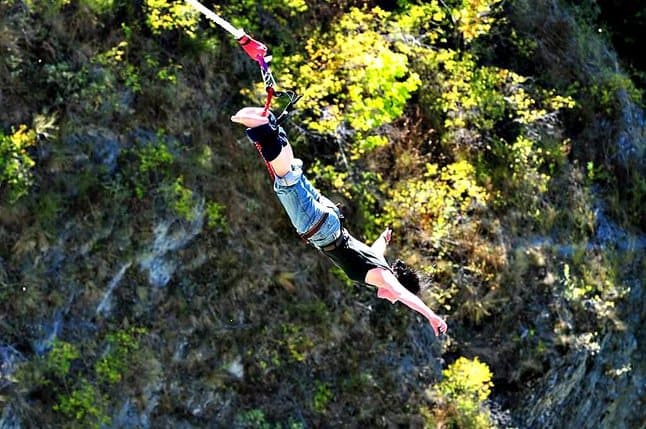
Who can't jump?
The operator sets weight and health limits (for example for heart or back problems, or pregnancy). We'll go through them with you when you book.
TripLocator
Local Partner NetworkFree to Join

Do you operate tours or local experiences in Nepal?

We'd love to partner with you. Whether you're an established tour operator, outdoor adventure specialist, or licensed local guide, join TripLocator® to showcase your tours and connect directly with travelers visiting Nepal.

Zero listing fees — let's help more travelers discover what makes your local experiences unforgettable.